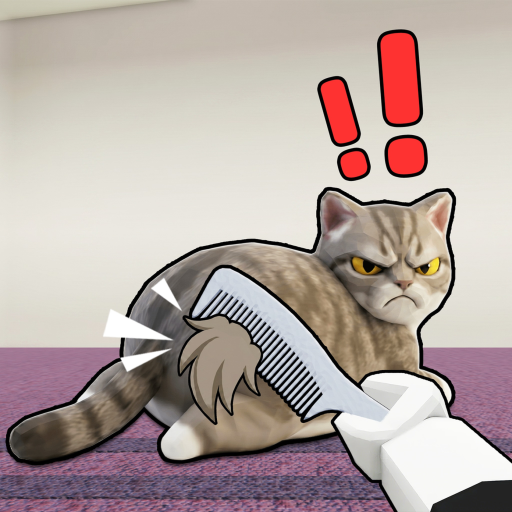
1. Current progress
Whatever the brushing meter reads right now on the cat in front of you. Snapshot it at the same moment each session — start of play — so session-over-session rows compare.
How progress works in a game with no stat table: builds as technique, cats as entities, and the measurement loop that makes improvement visible — checked 2026-10-03.
Improvement over time is official (get faster and better over time) and the experience is classed by Roblox as an Incremental Simulator. Because the game publishes no formula, the honest unit of progress is your own measured pace — meter points per minute on a fixed reference cat — and the honest build is the technique that raises it. This page defines the four inputs every tool on this site uses, the one-variable loop that turns measurements into improvement, and how the competition frame works in a 16-player server.
Every estimator on this site runs on these four observations. All four are free — the game shows them to you.
Whatever the brushing meter reads right now on the cat in front of you. Snapshot it at the same moment each session — start of play — so session-over-session rows compare.
Where you want the meter to land by end of session. Pick it from your own last session's output, not from anyone else's screenshot — other players' numbers describe other techniques.
Meter movement from one brush on one cat — the fur's resistance in one number. It changes per cat, per the official description, so it doubles as your fur-comparison metric.
Your stroke rate in a 60-second natural-rhythm sample. This is the number practice improves — the get faster and better over time line, made measurable.
The experimental discipline that makes a casual game improvable.
Invent a tier table, quote a hidden formula, or dress generic simulator advice up as game data. Searches dated 2026-10-03 (and the site's July 16, 2026 launch check) found no public source that documents stat values for this game — the officially documented facts are the loop, the cats, the fur, the improvement promise, and the 16-player servers. Everything quantitative on this site is therefore either a dated API snapshot or arithmetic over your own inputs, and this page holds that line because contaminated numbers are the thing that gets fan wikis untrusted. The source register lists every check behind the claims above.
Not in the gear sense — no equipment, upgrades, or loadouts are documented anywhere public as of October 3, 2026. The thing you actually build here is technique: a rhythm you can hold, a fur-handling feel per cat, and a measurement habit. In a game whose only progression is your own pace, that is the build.
The cats. They are the entities the whole loop runs on — each with different fur, each a distinct brushing challenge, and no other entity family (enemies, pets, units) appears in the official record. The cat roster page covers what is and is not documented about them.
Two numbers, one week apart, same cat: strokes in a 60-second sample, and meter movement per brush. If the product — meter points per minute — went up, the description's promise is landing on you specifically. That is the entire verification, and it needs nothing the game has not already shown you.
Feelings about pace are unreliable in both directions: a good session after a bad one feels like a breakthrough, and a plateau feels like a bug. One measured minute per session replaces the debate with a number — and unlike a stat sheet, it can never go stale, because you regenerate it every session.
Yesterday's you, first. Server standing second: 16-player servers make brushing results socially visible, and becoming the best Cat Brusher is the description's own goal. Cross-server comparison is the one thing the game does not support — no public ranking system exists — so leave it alone.
The brushing loop for the systems view, cat roster notes for the entities, and the session planner to put the four inputs to work tonight.